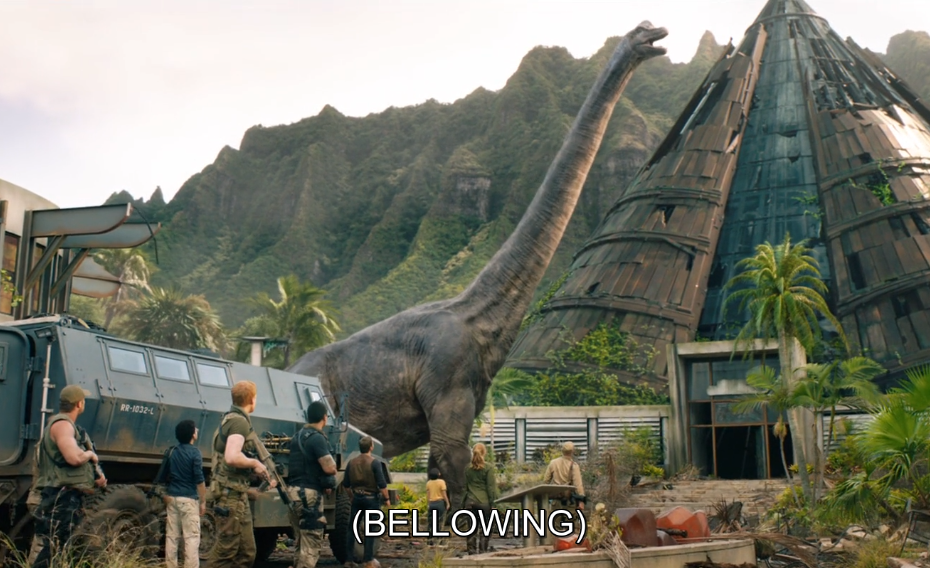
Jurassic World: Fallen Kingdom (2018)
Speech-to-text technology and audio-to-text conversion engines have been a great help when it comes to captioning videos nowadays. With a few clicks here and there, content creators or marketers can have automatic transcripts or captions in the palm of their hands. People can now easily rely on a free transcription service or a platform’s automatic caption generator for the captions of their video content.
Unfortunately, the closed captioning process is not that simple. If you truly want to provide your audience with helpful closed captions, you can’t rely on machines alone. You have to try a different approach. These automatic captions and transcriptions are great if you’re pressed for time. But if you want quality, better results, and a more inclusive environment, we recommend doing it with a hybrid approach.
What is the Hybrid Closed Captioning Process?
The hybrid closed captioning process is a combination of speech-to-text technology and manual, human labor. This is where you take a machine-generated transcript or automatic captions, and instead of using and applying it to your video as-is, it should be edited and improved manually.
This kind of captioning process takes a little more time and effort, since you’ll be checking and editing the automatic transcriptions and/or captions. However, this additional manual labor can go a long way for you and your video content. Whether you are a content creator or a business owner or a marketer, hybrid closed captioning can give you the competitive advantage you need.
Benefits of a Hybrid Closed Captioning Process
Following a hybrid approach means you get to reap benefits that will contribute to the success of your content and materials. Here are some of them:
Better Accuracy
The hybrid approach results in better accuracy for your captions. You’ll be able to check for errors and flaws and have the chance to correct them. Whether it be jargons, misheard words, misplaced homonyms, or more. The more you polish your closed captions, the better it will be for your audience of course.
Complete Closed Captions
What makes closed captions different from subtitles is that not only does it show the dialogue or speech in the video, it also describes background noises, music, sound effects, and more. You’ll see them encoded as (leaves rustling), (rock music playing), or (baby crying). Descriptions like these are what make closed captions distinct and beneficial, and you won’t be able to get this from the initial machine-generated transcript or captions. You’ll be able to add manual labor using a combined approach, to make sure that your closed captions are detailed and complete.